Why Does the Moon Look Bigger Near the Horizon?
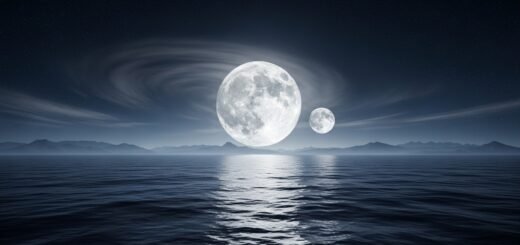
Many people notice the Moon looks unusually large when it first rises or sets near the horizon. It can appear enormous above buildings, trees, or distant hills, even though photographs often reveal that the Moon’s actual size has barely changed.
Direct Answer
The Moon looks bigger near the horizon mainly because of a psychological effect known as the “Moon illusion.” When the Moon appears close to buildings, trees, or landscape features, the human brain interprets it as being larger than when it is high overhead, even though its physical size in the sky remains nearly the same.
Key Takeaways
- The Moon illusion is mainly caused by human visual perception.
- The Moon’s actual size changes very little during moonrise or moonset.
- Nearby objects on the horizon affect how the brain judges size.
- Atmospheric conditions can slightly alter appearance but are not the main cause.
- The illusion often feels stronger in open landscapes or urban skylines.
The Moon Usually Is Not Physically Larger
One of the biggest misconceptions is that the Moon actually expands near the horizon.
In reality, the Moon’s angular size in the sky stays relatively stable throughout the night. Small variations can happen because the Moon’s orbit around Earth is slightly elliptical, but these changes are gradual and not specifically tied to moonrise or moonset.
Surprisingly, the Moon can even appear slightly smaller near the horizon because it is physically farther from an observer than when directly overhead.
What Is the Moon Illusion?
The most widely accepted explanation is a visual perception effect called the Moon illusion.
When the Moon is high overhead, it appears isolated in a large open sky with few reference points. Near the horizon, however, the Moon is seen alongside:
- Buildings
- Trees
- Mountains
- Roads
- Distant skylines
These familiar objects give the brain a sense of scale, which can make the Moon appear much larger than it actually is.
Why Photos Sometimes Look Different
People are often surprised when smartphone photos fail to capture the dramatic size they remember seeing.
That happens because cameras do not always interpret perspective the same way human vision does. The emotional and psychological part of the Moon illusion is difficult to reproduce with standard photography.
Telephoto lenses can sometimes exaggerate the effect visually, especially when photographers intentionally compress distance between foreground objects and the Moon.
Atmospheric Effects Can Slightly Change Appearance
The atmosphere is not the main reason for the illusion, but it can still affect how the Moon looks near the horizon.
For example:
- Dust and haze may give the Moon an orange or reddish color.
- Atmospheric turbulence can distort the Moon’s shape slightly.
- Moisture can soften the Moon’s edges.
These effects may make the Moon feel visually dramatic, even though they are separate from the size illusion itself.
Why the Illusion Feels Stronger in Certain Locations
The Moon illusion often becomes more noticeable when there are strong visual reference points nearby.
Large city skylines, coastlines, deserts, or open rural landscapes can make moonrise feel especially dramatic because the Moon is viewed against familiar objects at a distance.
Some photographers and stargazers specifically plan around moonrise timing for this reason.
You Can Test the Illusion Yourself
One simple way to test the effect is to look at the Moon upside down through your legs or compare it using a small object held at arm’s length.
When surrounding visual references are reduced, the Moon often appears smaller again.
This demonstrates how strongly the brain influences size perception.
Human Experience
The Moon illusion is one of those sky phenomena that still surprises people even after learning the science behind it. The effect can feel extremely convincing during a large orange moonrise over buildings or distant hills.
Many stargazers also notice that the illusion tends to feel more emotional in person than it appears in photos. A rising Moon often creates a sense of scale and atmosphere that cameras do not fully capture.
FAQ
Is the Moon actually bigger near the horizon?
No. The Moon’s actual apparent size changes very little during moonrise or moonset. The larger appearance is mainly caused by visual perception.
Why does the Moon look orange near the horizon?
The atmosphere scatters shorter wavelengths of light near the horizon, allowing warmer colors like orange and red to become more noticeable.
Why do phone photos make the Moon look smaller?
Smartphone cameras usually use wide-angle lenses, which reduce the dramatic perspective effect people experience naturally with their eyes.
Does the atmosphere magnify the Moon?
Not significantly. Atmospheric distortion can slightly affect the Moon’s appearance, but it is not the primary cause of the Moon illusion.
Is the Moon illusion scientifically proven?
The illusion itself is well documented, although scientists still debate some details about exactly how the brain interprets size and distance.